Genome Editing
Genome Editing A technology used to rewrite specific DNA sequences in an organism’s genome (the entire set of genetic information) to regulate or correct gene functions. 戻る

Genome Editing A technology used to rewrite specific DNA sequences in an organism’s genome (the entire set of genetic information) to regulate or correct gene functions. 戻る
International Society for Stem Cell Research (ISSCR) The world’s largest academic organization in the field of stem cell research. 戻る
Neuroprivacy A newly proposed right aimed at protecting the brain and neural activity. “Neuroprivacy” refers to the right to prevent unauthorized access to or misuse of neural data that may reveal an individual’s thoughts or memories. 戻る
Neurorights Newly proposed rights intended to protect the brain and neural activity. 戻る
Neurotechnology A broad term for technologies that record, regulate, or enhance nervous system activity, including that of the brain. It encompasses EEG devices for recording brain activity, fMRI for visualizing brain function, and brain-computer interfaces. These technologies have rapidly advanced in recent years. 戻る
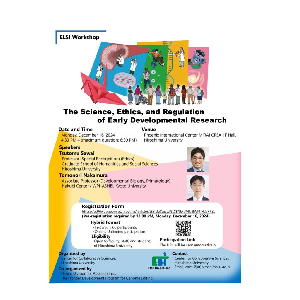
December 16, 2024 ELSI Workshop “The Science, Ethics, and Regulation of Early Developmental Research” Over the past decade, research on early human development has made remarkable strides. This field has the potential to bring significant benefits to many people, including patients. However, it also raises profound ethical questions regarding the extent to which embryos can be used in research and whether it is permissible to create embryos artificially. This workshop aims to provide a platform for understanding the latest scientific advancements while fostering discussions about the kind of society we should aspire to build through early development research. PDF:https://huccs.hiroshima-u.ac.jp/en/news/news-226/ Back to News Top
Organoid A three-dimensional tissue structure grown from pluripotent stem cells (which can differentiate into nearly all cell types in the body). Pluripotent stem cells include ES cells derived from fertilized eggs (embryos) and iPS cells created by introducing multiple genes into somatic cells like blood or skin cells.
Pluripotent Stem Cells Cells with both self-renewal capability (the ability to proliferate indefinitely) and pluripotency (the ability to differentiate into all of the cell types that make up the body). Examples include ES cells (artificially derived from the inner cell mass of a blastocyst 5–7 days after fertilization) and iPS cells (artificially created by introducing multiple genes into skin or blood cells). Back to ”Glossary Page"
認識的不正義ハンドブック Author:Chie Kobayashi 担当範囲:第6章 認識的不正義と倫理学 November 26, 2024 https://www.keisoshobo.co.jp/book/b654217.html