投稿者名:tagoaika

Event

ELSI Workshop“The Science, Ethics, and Regulation of Early Developmental Research”

December 16, 2024 ELSI Workshop “The Science, Ethics, and Regulation of Early Developmental Research” Over the past decade, research on early human development has made remarkable strides. This field has the potential to bring significant benefits to many people, including patients. However, it also raises profound ethical questions regarding the extent to which embryos can be used in research and whether it is permissible to create embryos artificially. This workshop aims to provide a platform for understanding the latest scientific advancements while fostering discussions about the kind of society we should aspire to build through early development research.   PDF:https://huccs.hiroshima-u.ac.jp/en/news/news-226/ Back to News Top

未分類

Organoid

Organoid A three-dimensional tissue structure grown from pluripotent stem cells (which can differentiate into nearly all cell types in the body). Pluripotent stem cells include ES cells derived from fertilized eggs (embryos) and iPS cells created by introducing multiple genes into somatic cells like blood or skin cells.

未分類

Pluripotent Stem Cells

Pluripotent Stem Cells Cells with both self-renewal capability (the ability to proliferate indefinitely) and pluripotency (the ability to differentiate into all of the cell types that make up the body). Examples include ES cells (artificially derived from the inner cell mass of a blastocyst 5–7 days after fertilization) and iPS cells (artificially created by introducing multiple genes into skin or blood cells). Back to ”Glossary Page"

News Release

Neuroprivacy Concerns in Human Brain Organoid Research

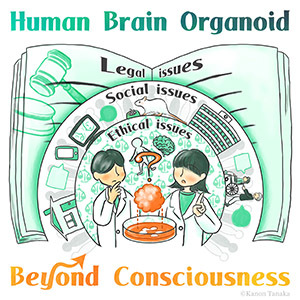
October 16, 2024 Neuroprivacy Concerns in Human Brain Organoid Research Advances in neurotechnology have prompted important discussion around the idea of “neurorights,” which are a set of human rights aimed at safeguarding neural data and mental privacy. While these concerns primarily focus on technologies such as brain–computer interfaces, a recent article explores how the concept of neuroprivacy, one component of neurorights, applies to research using human brain organoids, which are structures grown from stem cells that mimic certain aspects of the human brain. These organoids offer new ways to study brain development and diseases, but they also raise ethical questions about privacy and consent. This study concludes that brain organoids developed from stem cells present minimal risk to mental privacy, but calls for greater clarity on the protection of donor data related to brain diseases. Neuroprivacy encompasses the protection of neural data, but the primary concern is typically m

News Release

Legal Challenges in Human Brain Organoid Research and Its Applications

August 22, 2024 Legal Challenges in Human Brain Organoid Research and Its Applications A recent study has explored the legal and ethical challenges expected to arise in human brain organoid research. Human brain organoids are three-dimensional neural tissues derived from stem cells that can mimic some aspects of the human brain. Their use holds incredible promise for medical advancements, but this also raises complex ethical and legal questions that need careful consideration. Seeking to examine the various legal challenges that might arise in the context of human brain organoid research and its applications, the team of researchers, which included a legal scholar, identified and outlined potential legal issues. Notably, the study has evaluated the urgency of these issues, thereby establishing regulatory priorities for the future. The complexities involved in this area have often been overlooked, making this study a crucial step forward. Legal challenges were categorized into five key

1-7-1, Kagamiyama, Higashi-Hiroshima 739-8521 JAPAN

Uehiro Division for Applied Ethics
Graduate School of Humanities and Social Sciences, Hiroshima University

上部へスクロール