
News Release

News Release

Respect Without Romanticizing:Cultural Values, Parental Reasons, and Unproven Pediatric Treatments in East Asia

Respect Without Romanticizing: Cultural Values, Parental Reasons, and Unproven Pediatric Treatments in East Asia Hiroshima University ethicists argue that absolute genetic confidentiality can harm families and the public Bioethics researchers from Japan and Korea have jointly published a critical examination of how to evaluate and respect “parental reasons” when making decisions about whether to undergo unproven pediatric treatments to children. The study, which published in The American Journal of Bioethics, analyzes two prominent cases in East Asia: South Korea’s Hwang Woo-suk stem cell scandal and Japan’s umbilical cord blood controversy, and show how sincere parental devotion can be manipulated by researchers, clinicians, and commercial entities when scientific uncertainties are obscured by moral rhetoric. ”Our goal is to respect cultural values without making them unconditionally paramount,” said Tsutomu Sawai, a Hiroshima University professor (special recognition) and autho
News Release

Ethics should lead, not play catch-up, Hiroshima University expert emphasizes as Japan panel OKs making human embryos from stem cells

Ethics should lead, not play catch-up, Hiroshima University expert emphasizes as Japan panel OKs making human embryos from stem cells As Japan moves closer to becoming the first nation to allow research on human embryos created from lab-grown sperm and eggs, a leading bioethicist at Hiroshima University has cautioned against the widening gap between rapid scientific advances and slower pace of ethical and societal deliberation. A leading bioethicist at Hiroshima University is calling for an anticipatory, rather than reactive, approach to ethics after a Japanese government panel in August backed a report that brings the country a step closer to becoming the first in the world to allow research on human embryos created from stem cell–derived sperm and eggs. In a correspondence article titled “Ethics must keep pace with embryo research” published in the journal Nature (Vol. 646), Hiroshima University Professor (Special Recognition) Tsutomu Sawai cautions that science is advancing faster

News Release

Patient privacy is not always paramount​

Patient privacy is not always paramount Hiroshima University ethicists argue that absolute genetic confidentiality can harm families and the public A new study from Hiroshima University challenges the long-held belief that patient confidentiality should always take precedence in medicine. In their essay, published in The American Journal of Bioethics, Rie Iizuka, Shu Ishida, and Tsutomu Sawai critically assess philosopher M. K. Kilbride’s suggested framework for determining when healthcare professionals may disclose a patient’s genetic information without consent.   The authors argue that when it comes to genetic information, refusing to disclose risks to family members can perpetuate harm across generations, particularly for hereditary conditions such as cancer that often emerge only after individuals have children.   The Hiroshima team argues that Kilbride’s model, which requires six strict conditions all be met before disclosure, is too restrictive and the conditions can contradict

News Release

Novel philosophical framework rethinks the ethics ofdisability

Japanese scholars submit a nuanced view linking diverse disability experiences Researchers at Hiroshima University (Japan) have introduced a new philosophical framework—“conditional bad-difference view” (Conditional BDV)—to understanding ethically important featuresof disability. Published in the journal Bioethics , Conditional BDV offers a nuanced way to think about the relationship between disability and well-being, aiming to better reflect and respect the diverse experiences of disabled individuals. The Conditional BDV was developed in response to shortcomings in the two dominant philosophical perspectives for disabilities. The “bad-difference view” (BDV) holds that a disability is inherently detrimental to well-being, even in ideal situations without discrimination against disabled people. By  contrast, the “mere-difference view” (MDV) considers a disability as ethically neutral in such nondiscriminatorysettings, just like race and gender. The novel Conditional BDV challenges this

News Release

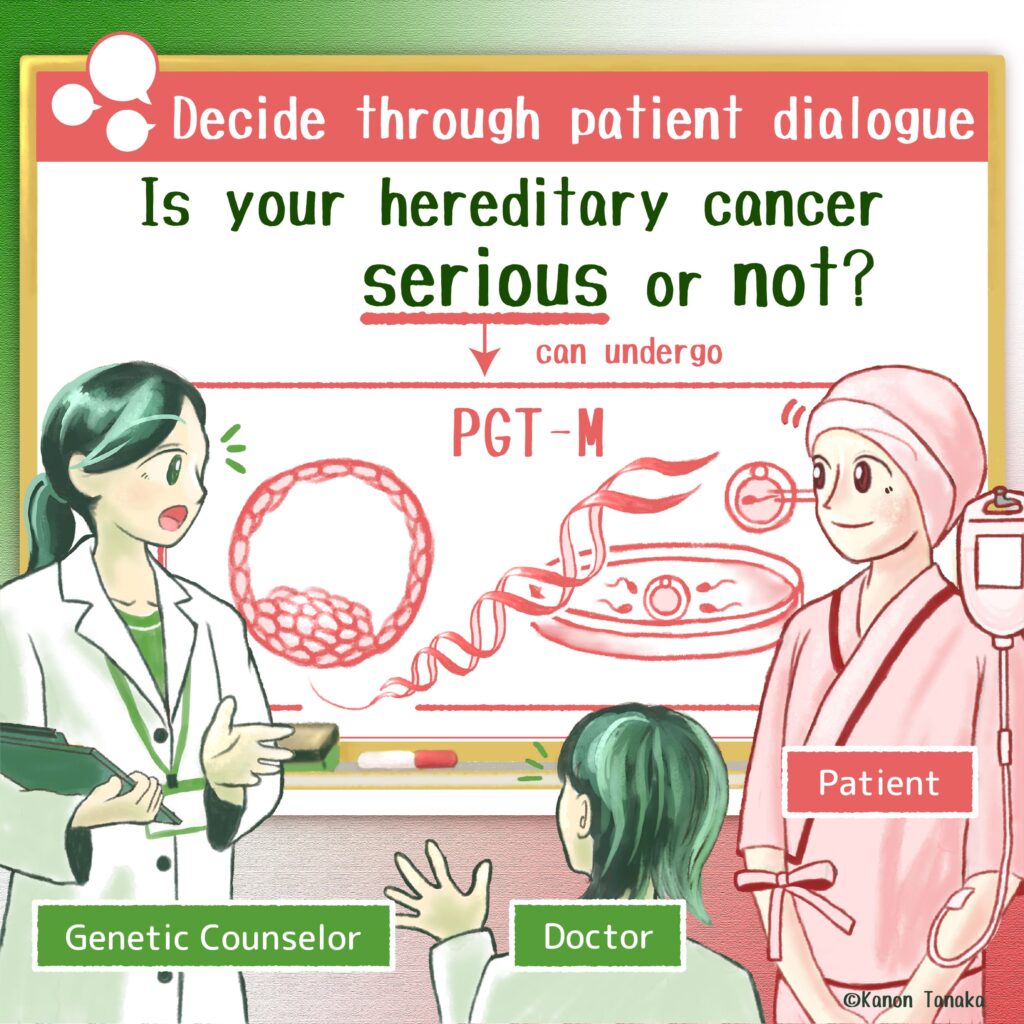
Team publishes correspondence article reevaluating ‘seriousness’ in genetic conditions~Examines how patient voices impact decision-making~

Team publishes correspondence article reevaluating ‘seriousness’ in genetic conditions Examines how patient voices impact decision-making A team of three Japanese researchers has conducted a survey of stakeholders to examine how patient voices impact decisions related to genetic testing for hereditary cancers. These stakeholders included patients, healthcare professionals, and ethicists attending a workshop in Hiroshima in early 2025. The correspondence is published in the European Journal of Human Genetics on March 15, 2025.   There are differences of opinion in how to assess “seriousness” in genetic conditions. “In Japan, the seriousness of genetic disorders has traditionally been assessed using narrow medical criteria, limiting access to preimplantation genetic testing for monogenic diseases to only a small number of conditions. However, cases like retinoblastoma—which was only recognized as ‘serious’ after six years of patient advocacy—underscore the urgent need to incorporate sta

News Release

Why regulating stem cell–based embryo model research is important (yet controversial)

Why regulating stem cell–based embryo model research is important (yet controversial) The stem cell-based embryo model and actual human embryos share many characteristics but are distinctly different. However, internationally, not everyone agrees on the definitions and what we should and should not do in using this research model.   The stem cell-based embryo model (SCBEM) takes advantage of the flexibility of pluripotent stem cells (non-reproductive cells that can give rise to many different types of cells) to resemble that of embryos. While this model has helped to advance research in diseases and develop therapies or treatments, it has also sparked international debate on what regulations should be placed on this type of experimentation. Researchers reviewed what countries are doing to regulate SCBEM and proposed what regulation should look like for this field of stem cell research to move forward in a manner that everyone can agree is ethically sound.   The researchers published t

News Release

Japanese researchers argue ChatGPT is ready to teach medical ethics

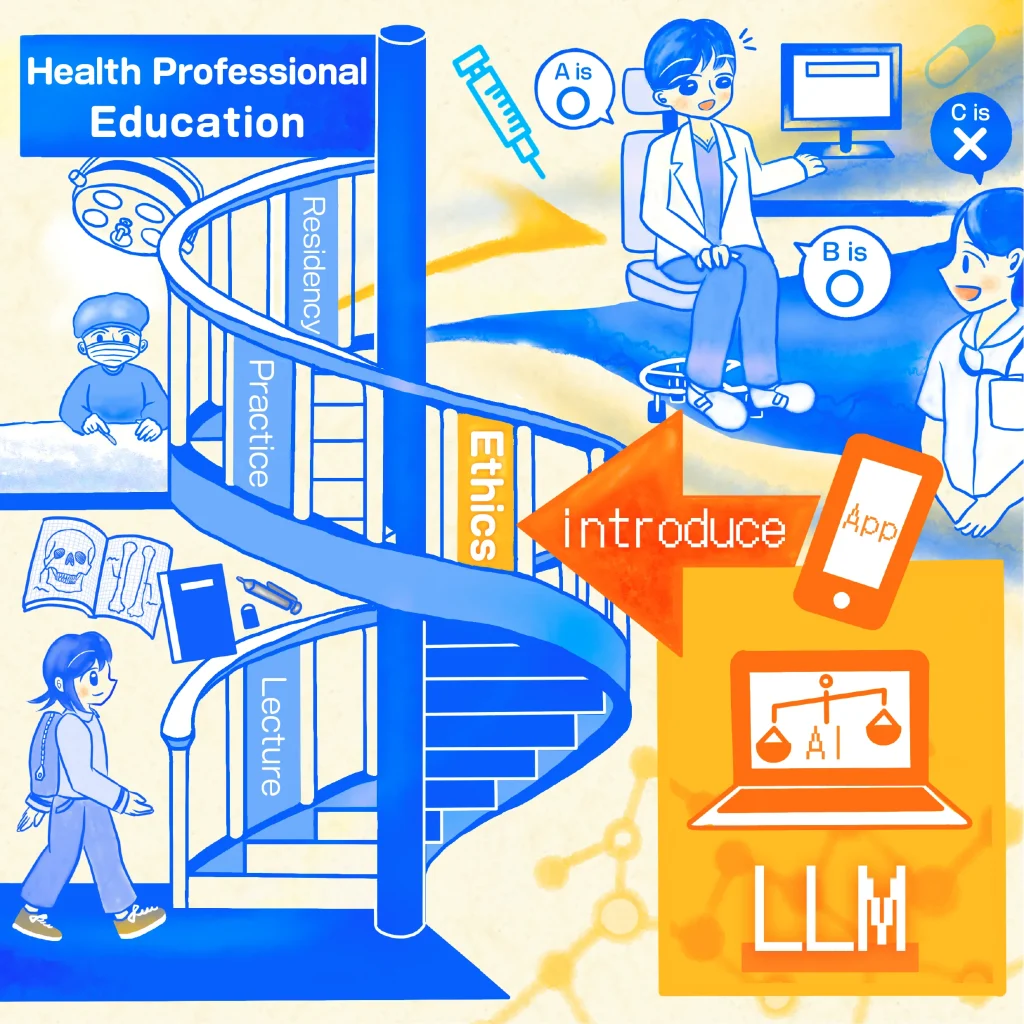
Japanese researchers argue ChatGPT is ready to teach medical ethics Perhaps no profession has stricter ethical standards than medicine, and ethics is considered essential in the education of any respected medical school. A new essay by researchers at Hiroshima University (Japan) provides a framework for how Large language models (LLMs) like ChatGPT can be incorporated into ethics education for medical programs. The essay, which can be read in BMC Medical Education, argues that the adoption of LLMs into medical curricula can significantly contribute to the acquisition of moral knowledge and the cultivation of virtue, two main aspects of medical ethics. LLMs have disrupted almost every industry including the medical industry. Every day, professional healthcare workers and even patients are relying on LLM tools to advise on diagnosis and treatment plans. One reason for the quick adoption is that they work, as LLMs are showing remarkable capabilities in diagnosing a medical condition from

News Release

Ethical, Legal, and Social Challenges of Human Brain Organoid Research

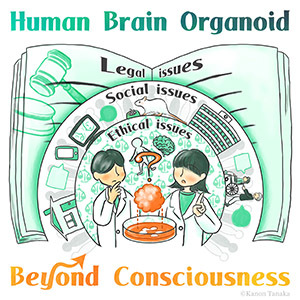
January 21, 2025 Ethical, Legal, and Social Challenges of Human Brain Organoid Research Human brain organoids, small structures grown from stem cells that replicate key aspects of human brain tissue, are a promising avenue for scientific research. These organoids can offer insights into brain development, neurological diseases, and the effects of various treatments. However, as the field of human brain organoid research advances, it brings with it a range of ethical, legal, and social issues that need careful consideration. A recent review by an international team of researchers highlights these concerns, calling for a responsible, multidisciplinary approach to guide future research in this field. Human brain organoids are typically created from human pluripotent stem cells, which have the ability to differentiate into various cell types, including neurons. By controlling the environment in which these cells grow, researchers can create tissues that mimic certain structures and functi

News Release

Neuroprivacy Concerns in Human Brain Organoid Research

October 16, 2024 Neuroprivacy Concerns in Human Brain Organoid Research Advances in neurotechnology have prompted important discussion around the idea of “neurorights,” which are a set of human rights aimed at safeguarding neural data and mental privacy. While these concerns primarily focus on technologies such as brain–computer interfaces, a recent article explores how the concept of neuroprivacy, one component of neurorights, applies to research using human brain organoids, which are structures grown from stem cells that mimic certain aspects of the human brain. These organoids offer new ways to study brain development and diseases, but they also raise ethical questions about privacy and consent. This study concludes that brain organoids developed from stem cells present minimal risk to mental privacy, but calls for greater clarity on the protection of donor data related to brain diseases. Neuroprivacy encompasses the protection of neural data, but the primary concern is typically m

News Release

Legal Challenges in Human Brain Organoid Research and Its Applications

August 22, 2024 Legal Challenges in Human Brain Organoid Research and Its Applications A recent study has explored the legal and ethical challenges expected to arise in human brain organoid research. Human brain organoids are three-dimensional neural tissues derived from stem cells that can mimic some aspects of the human brain. Their use holds incredible promise for medical advancements, but this also raises complex ethical and legal questions that need careful consideration. Seeking to examine the various legal challenges that might arise in the context of human brain organoid research and its applications, the team of researchers, which included a legal scholar, identified and outlined potential legal issues. Notably, the study has evaluated the urgency of these issues, thereby establishing regulatory priorities for the future. The complexities involved in this area have often been overlooked, making this study a crucial step forward. Legal challenges were categorized into five key

1-7-1, Kagamiyama, Higashi-Hiroshima 739-8521 JAPAN

Uehiro Division for Applied Ethics
Graduate School of Humanities and Social Sciences, Hiroshima University

上部へスクロール